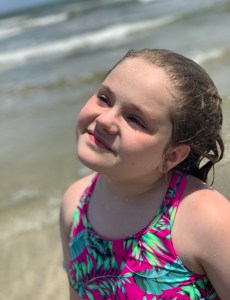
**Disclaimer** Before you read further, I would like to mention here that we love and appreciate the medical community, and this post is in no way meant to disparage doctors or the work and research they are part of every day. I am sharing her diagnosis story in detail because her condition is so rare, especially in children, that many doctors have never seen a patient with Myasthenia, and there may be families out there who are going through similar circumstances and don’t know how to search for answers or advocate for different testing. Reading people’s stories of misdiagnosis gave me hope when we were so confused, and I hope this will do the same for someone else.
Once we were discharged from the hospital with the diagnosis of conversion, also known as functional neurological disorder, I was determined to get to the root cause of her stress and anxiety. In our paperwork, we saw that an appointment was made for us the very next week with a psychiatrist. We had been told that, with the right treatment from doctors who specialize in conversion, we could get Ella on the right track. Something about it all just didn’t sit right with me, but we went to that appointment with high hopes. It was a 3 hour appointment. We went through every aspect of her 10 years of life. The psychiatrists agreed that Ella did suffer from some anxiety, and she has definitely had some life stressors, but they could not fully get on board with the conversion diagnosis.
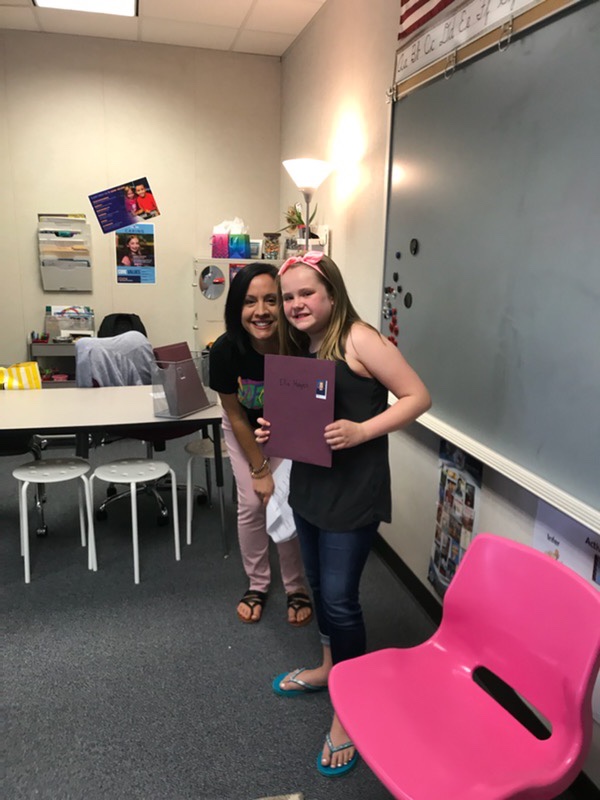
I should’ve been excited about this, but instead I felt lost and confused. Ella seemed a little hopeful, but she was frustrated and embarrassed by her impaired speech. One thing we did notice was that when she was very, very calm and still, it got better. She went back to school for the last day of school party, but because she was so nervous, her speech got a little worse. One of the “cool” kids there made fun of the way she was talking, and it really crushed her spirit. We do our best to train kids to not respond when others make fun of them, but it doesn’t take away the hurt. Despite the hard parts, she was still glad to be able to see her teacher and her friends.
Armed with the professional confirmation that it most likely wasn’t conversion, I went into full blown mad-woman, ask everyone I know and read research articles all hours of the night mission. One of the first things I did was take her to her pediatrician, Dr. Ho. He has been our pediatrician since my oldest was born, and he also treats my sister’s children. He knows our family, and I trust and value his opinion. If he told me it was conversion, I’d be more willing to accept it. At our appointment, I showed him pictures and videos of the differences in her speech and facial drooping, and he examined her and really listened with an open mind. He read through the reports from the hospital and from psychiatry. He then gave me the reassurance I needed: You need a second opinion. He said (paraphrased), “I don’t know what this is, but I don’t believe it’s conversion. Could be demyelination, could be something else, but I think you need to have a new neurologist look at it.” He even gave us several names of neurologists he believed would take the time to research it. I am forever grateful to Dr. Ho for supporting us at this time!!
Unfortunately, the new neurologist couldn’t see us for 3 weeks. We had a previously scheduled followup appointment with her allergist (because of the hives), so I figured we could explore the allergy question there. Maybe something she was eating or wearing was doing this? Allergist says, “No, I’m sure this isn’t allergy related. You should definitely see a neurologist.” Ugh.
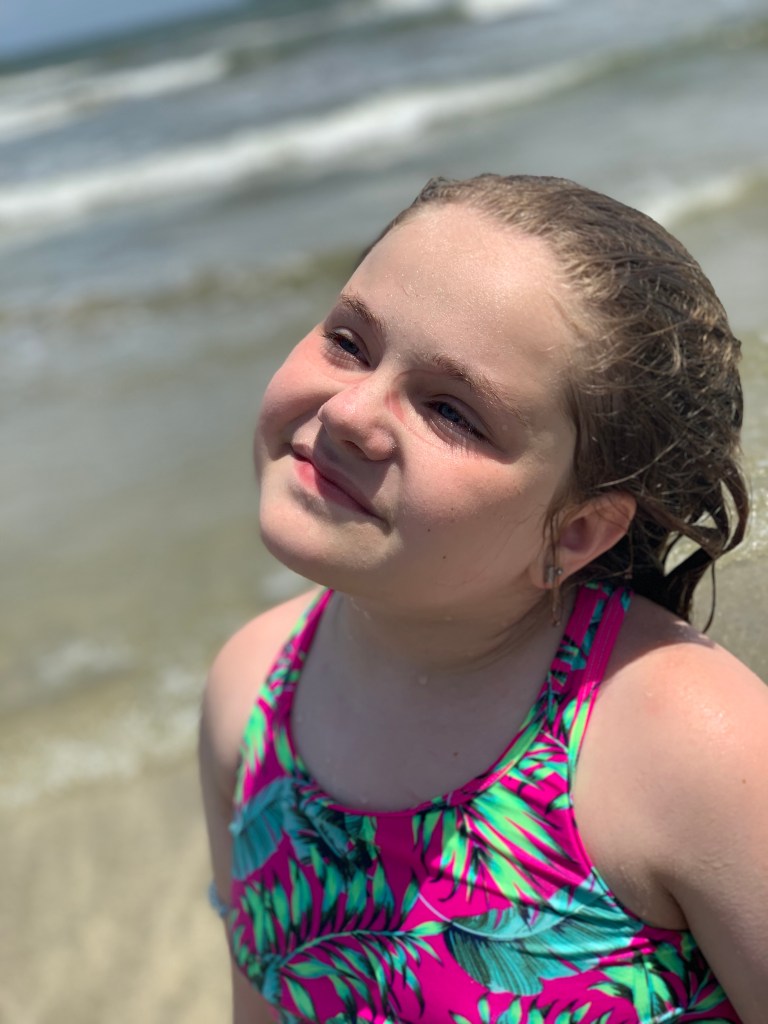
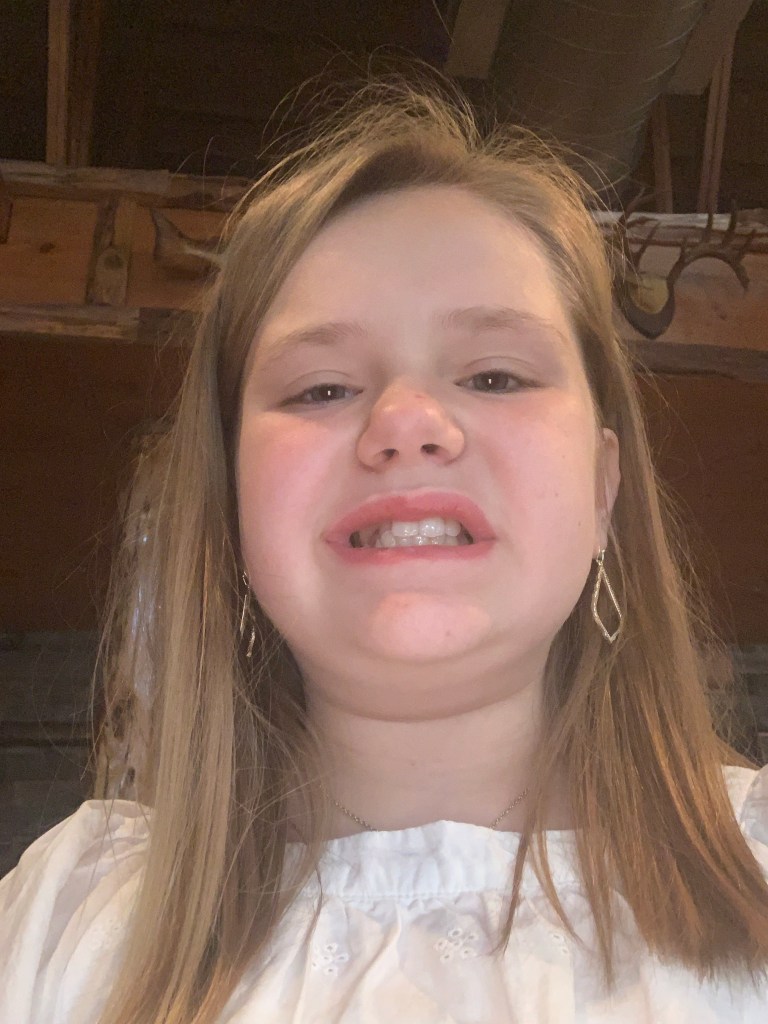
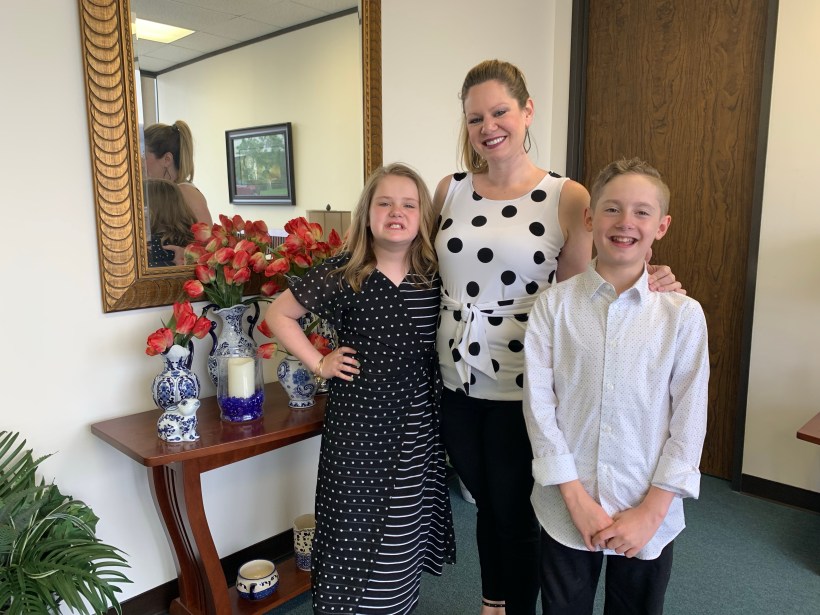
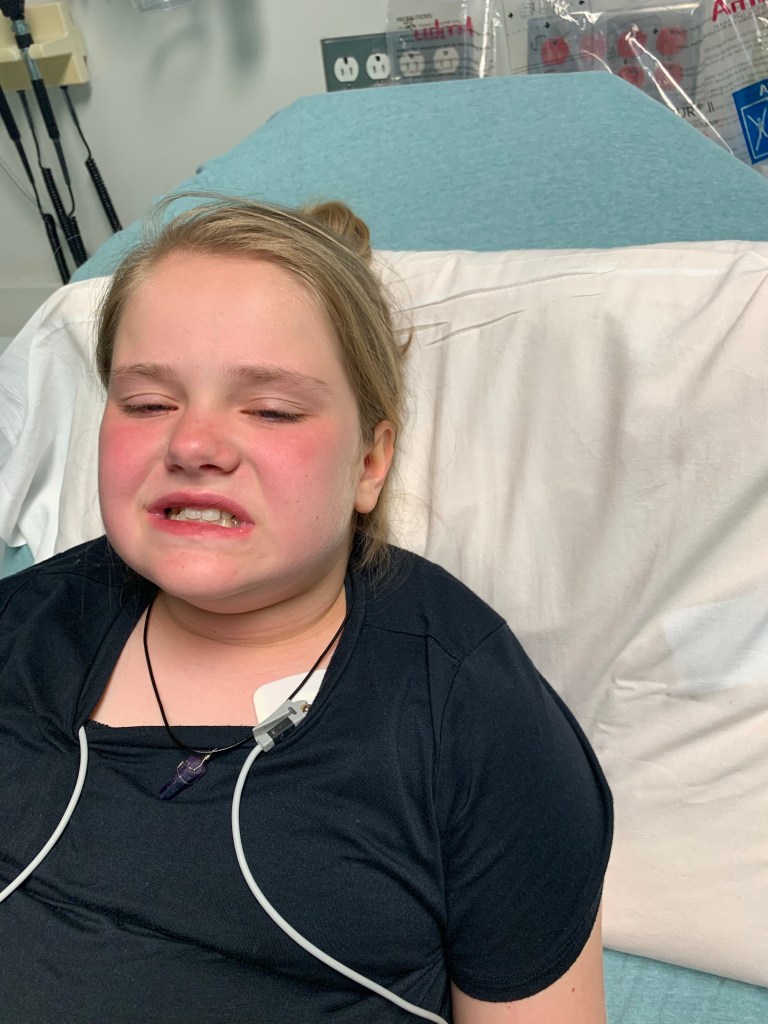
Meanwhile, back at the bat cave, Ella started practicing different ways to pose for pictures to hide her smile. We told her she was beautiful exactly how she was, but you can’t knock her creativity!
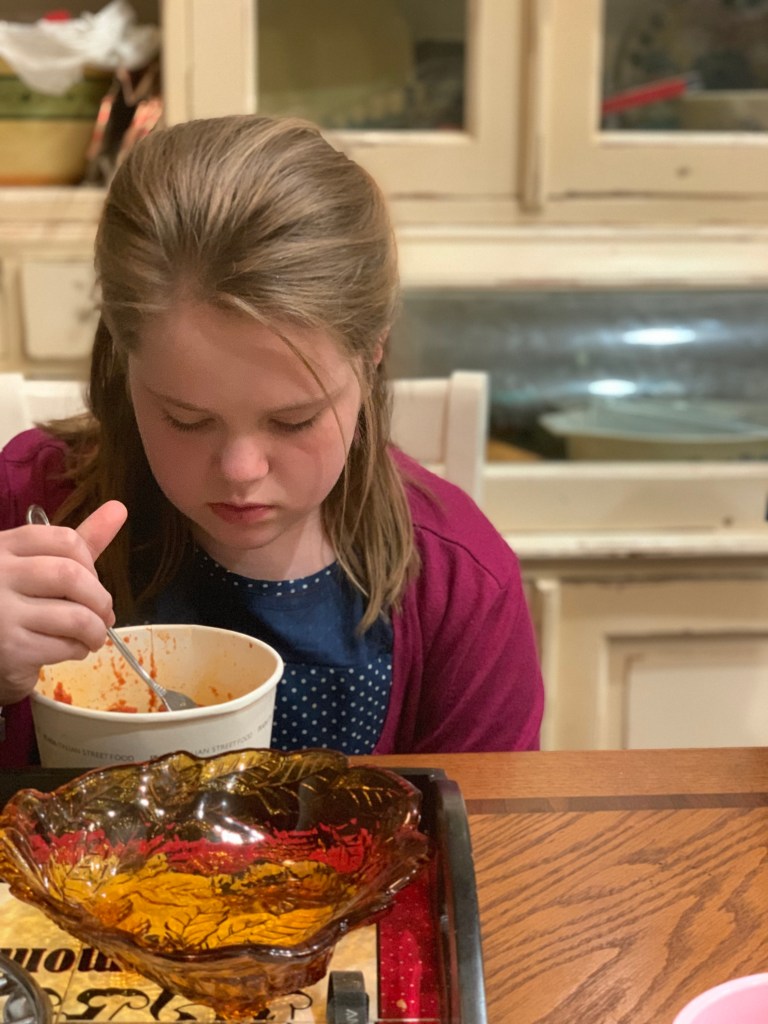
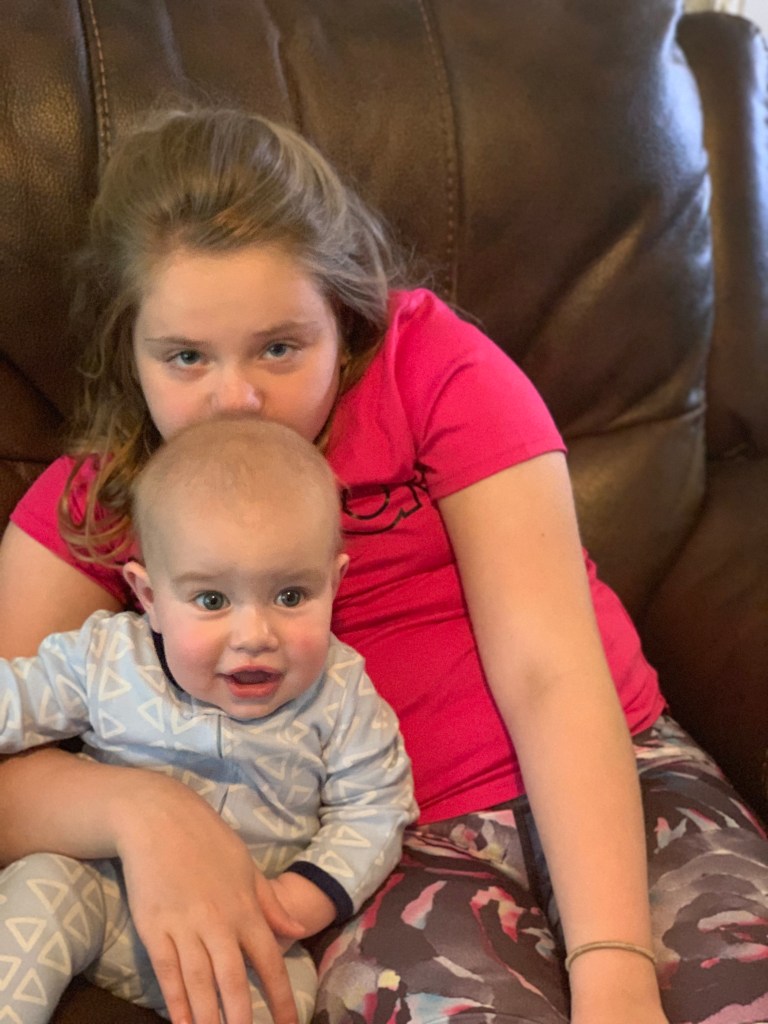
Ella’s speech seemed to be getting worse every day, but every morning she sounded almost normal, so I continued to research into the late hours of the night and decided to activate my network. I had been pretty private about what was going on, but it was time to call in backup. I work in the field of Special Education, so I called the best speech path I know, my sweet friend Brandi. She asked questions about the speech, how she was swallowing, and what it sounded like. I sent her videos, and we talked about them and she was on the phone with me for probably hours while I was asking a million questions, and she gave me the first word I needed to continue: dysarthria.
I read everything I could get my hands on about dysarthria. What causes it? What muscles are involved? Particularly dysarthria that is worse in the evenings, which led me to a question of whether or not she may have had damage from her tonsillectomy the previous summer. I made an appointment with an otolaryngologist, Dr. Raynor, to talk about this. I was told she was one of the best at her medical establishment. Dr. Raynor was wonderful. She examined Ella, listened to and carefully watched her talk, watched my videos, and listened to my frustration and concern with sincere empathy. When we were finished, she sat quietly for a moment with her thoughts and then looked up at me with the sweetest and saddest look I had ever seen from a doctor. She told me it wasn’t anything caused by her tonsillectomy and that it didn’t sound like conversion at all, but looked more like muscle fatigue. She said her soft palate was becoming fatigued throughout the day, and that was causing the nasal voice, and that her tongue seemed to be getting fatigued as well. She used the words “motor neuron” at some point, and I wrote that down and underlined it. She said she could tell that I’m a mom who won’t give up until I get an answer, that I was doing the right thing, but that she didn’t have the answer. She encouraged me to see a new neurologist and offered up a specialist who works with a speech path and could do a video study of her mouth and throat muscles. I was in. Sign her up! But it would be 3 months or so before they could get me on that schedule.
I cried. Right there in the office. Giant tears that I had been holding in for weeks just seemed to pour out, and I couldn’t stop them. Snot was coming out of my nose, and my shoulders started heaving and either tears or snot was dripping onto my notes, blurring everything I had written down. I was embarrassed and apologized. She silently handed me a tissue and put her hand on mine and had tears in her eyes when she said, “This must be so hard.” I hadn’t cried in front of Ella about this, and I was trying to be so positive for her, but the compassion and empathy from this woman I had just met…it broke me. When we were walking out of the building, Ella took my hand, looked up at me and, in true Ella fashion, said “Really Mom…you have GOT to get yourself together. You just cried in front of a doctor. THAT was weird.” And we laughed all the way to the car.
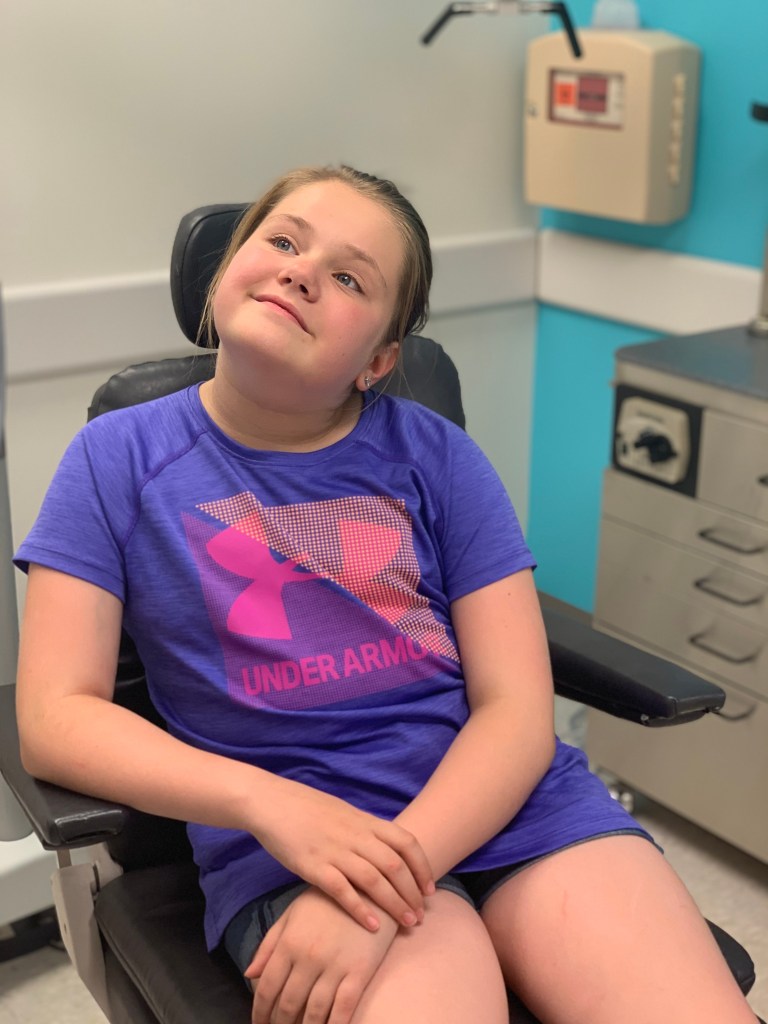
I felt defeated, but I kept researching and reading. Now I had the words “motor-neuron” to add to my search, and the results of those searches plus dysarthria terrified me. So I called my next contact, my childhood friend Miranda. Miranda is a physician assistant (please don’t call them physician’s assistant…I’ve since learned they hate that), and she told me I should prepare for the new neurologist visit by not only having the records and tests results from her hospital visit but to make a timeline of all of her symptoms and be fact based with them, and then to make a list of any questions or diagnoses I would like to have considered. Miranda may not know it, but she gave me THE piece of the puzzle I needed.
I wrote out a detailed timeline, and then I started making a list of all the symptoms she was experiencing. I kept reading until I could make a list of possible diagnoses, but none of them felt quite right, especailly when I started reading through people’s personal stories of illness. I am keenly aware of how people feel about “google doctors,” so I tried to pull as much as I could from research studies on NIH (National Institute of Health), but really I just ended up consuming massive amounts of information from a ton of different sources. I just started plunking her symptoms into the google bar together, and every time I would learn a new word or phrase that made sense, I would change up the search.
As one example, I went from “slurred speech” to “fatiguing soft palate” to “dysarthria and muscle fatigue.” One thing I came across in this process was this article from the New York Times. An older woman who presented with fluctuating dysarthria (thank you Brandi!), and when they realized she hadn’t had a stroke, it stumped the doctors until they figured out it was Myasthenia Gravis.
Myasthenia. That was a new and difficult word for me. I had to practice just be able to pronounce it. But wait…they call it MG (whew!) Then I started researching MG and moved my search to social media. It was June…Myasthenia Gravis Awareness Month!!! There were a TON of posts about MG and how hard it was to get diagnosed, and people shared their stories as part of the awareness push. Myasthenia Gravis Foundation of America was also an excellent source of information. A lot of what I saw seemed similar to Ella, so I just added it to my list of possibilities.
Finally, it was time for the neurology visit. Dr. Akbar, a pediatric neurologist (on the opposite side of town, but SO worth the drive) was an EXCELLENT listener. She read my list. Watched my videos. Asked both me and Ella a ton of questions. When she got to the Myasthenia Gravis question, she did a neurological eye exam where she held a finger over Ella’s head and made ella look straight up with only her eyes for a whole minute. After that, she shrugged and said (again paraphrased), “Typically with Myasthenia she would have eye drooping or double vision after that test, and she didn’t have either. So here’s the deal: We’re going to rule out everything we can, but I agree that conversion was not the right diagnosis. I’ll order genetic testing, EKG, a new and more specific MRI, and I’ll send you to an immunologist to rule out some other stuff. And…let me just say this…I only know what I’ve read in textbooks about Myasthenia. I’ve never actually seen it, and it’s super rare in kids. But if you want a test for it, then I’ll run it. Never hurts to try, right? May as well rule it out.” Looking back on this conversation, I can only say, “We are SO grateful for you, Dr. Akbar!!!”
She got poked for several vials of blood a couple of days later, and we scheduled the imaging and other tests and made all new appointments with the doctors she had recommended. It felt hopeful, but anyone searching for a diagnosis knows this: it’s a waiting game. Waitlists for new doctors, finding times for scheduling the ordered imaging to match my work schedule, etc. Everything takes time.
As the days progressed, Ella began to deteriorate further. Her speech became almost unintelligible in the evenings. If she got mad at anyone (and she’s a fireball of girl drama), she would start talking fast and flailing her hands, and it would get to the point where I was trying as hard as I could to understand her, but I couldn’t. Some days this brought tears of frustration, and on others we were able to start laughing in the middle of a tirade and suddenly realize that what she was mad about was ridiculous and wasn’t worth not being able to talk. We laughed as much as we could. She started to seem tired all the time and was moving slowly. One day she handed me a water bottle because she couldn’t open it, and I noticed the lid was barely screwed on, so it should’ve been totally easy. She had trouble sitting up when she was laying on her back, so she compensated by bringing her knees to her chest and rocking until she had enough momentum to sit up.
And then one day, she was feeling better and took off running in the yard to do a cartwheel and went right down onto her face. She couldn’t support herself at all, and this was the one saddest things I had seen because Ella. Loves. Cartwheels. She has been doing them almost perfectly since she was 4.
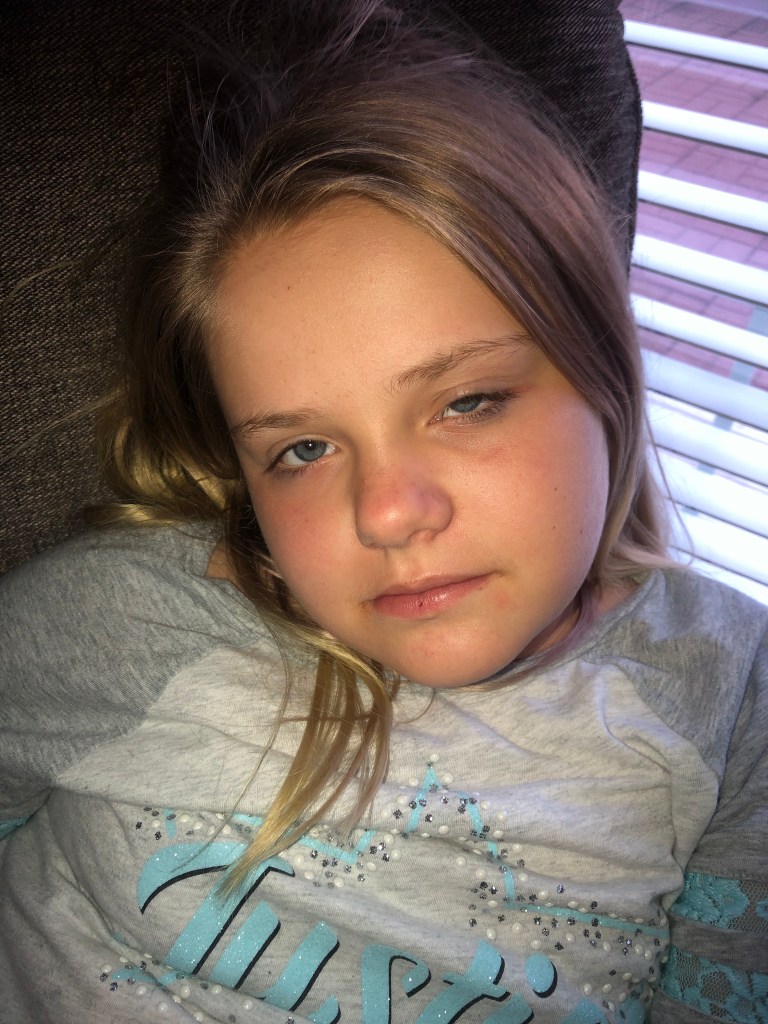
One thing I kept reading about with Myasthenia was that most people experience a drooping eye or eyes, but that wasn’t happening. It was what most anyone said when we mentioned Myasthenia, and then, after the cartwheel incident, this crazy girl did the equivalent of “hold my beer” :
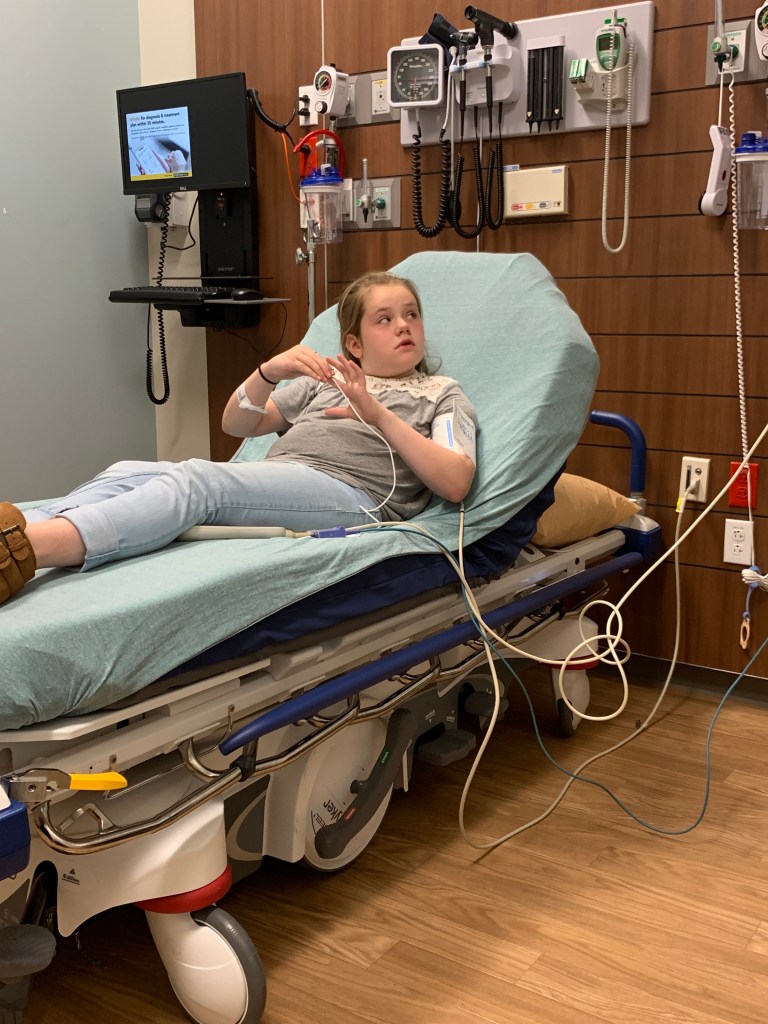
One evening the next week, Ella stood up from the couch and collapsed. Her legs weren’t working, and she was struggling to get a breath. At this point, I knew. I had to begin to focus all of the research and reading onto Myasthenia Gravis and was also checking daily for new personal diagnosis stories on social media. This was too similar. We rushed her to the local emergency room, and I told the doctor what I thought was causing the problem but that her blood work wasn’t back yet. He said he wouldn’t really know what to do in that case, and since she seemed to be getting better after resting, he sent us home and told us we should see a neurologist. Remember when we were kids it was cool to say “No Duh” all the time? I’m a full blown adult with a real grown up job, and my first inclination was to look up, roll my eyes, and say, “No Duh, dude.” (But I didn’t. See Mom?? All your talks about not talking impulsively really paid off!)
The next day, Ella was definitely weak throughout her whole body. She could barely walk and getting dressed was almost impossible. I called the pediatrician and he was on vacation (what? doctors get those? but what if I needed him and I couldn’t trust anyone else??!), but his colleague took the call, and she was just what we needed. She called ahead to the children’s hospital ER and told us to go immediately. My wonderful parents helped me get her situated enough to get out of the door and drove us to the hospital so they could help and be there with me.
The only thing was…the lead neurologist on call that day had been part of the team who diagnosed her with conversion. After several exams (including one where they made her get up and walk and told me not to offer her a hand even though she could barely support her weight), she called me into the hallway of the ER, and with activity of the busy day buzzing all around us and the team of doctors behind her, told me they were sending us home because she still only has conversion. This was proven to them because she could support her weight for a brief period of time, and her speech returned to normal for a moment when they used a “distraction technique” of asking her off topic questions (really what happened was that their portion of the conversation gave her mouth enough time to rest, so she wasn’t distracted so much as rested), and her oxygen levels were fine which meant the breathing was just anxiety. (But what I already knew about that was that with Myasthenia, the diaphragm can be weak and oxygen levels can remain stable until the last minute which causes a lot of confusion for doctors who aren’t familiar with that). The doctor assured me that with the right team of specialists in psychiatry I could get her the help she needed to get better.
And this, my friends, is where I lost it. Absolutely lost it. I don’t know how, other than the grace of our Loving Lord (because by this time I had people praying with us for answers from everywhere), but for this moment in time I lost all fear and timidity and spoke with the most direct clarity I’ve ever had in my life. And it went something like this:
The right team of specialists in psychiatry? Can you please tell me who would be involved in that? Because the last team of psychiatrists that YOUR TEAM sent us to told us they didn’t believe it was conversion. Did you read that in her records? Is there a different team I don’t know about? (awkward silence) Every other doctor we’ve been to has told us they don’t know what it is but that it is definitely not conversion. And we’ve been to more than two types of doctors. If you are telling me there is someone that can help her besides you, then I am not leaving this hospital until we see those specialists, and we are given some actual answers and see improvement. There isn‘t a doubt in my mind that it’s Myasthenia Gravis, and her blood work will be back any day now. In the meantime, I have a 10 yr old child in that room who was completely normal 2 months ago and has now deteriorated to the point where she can’t walk, she can’t talk, and is struggling to breathe. Have you ever seen a child with Myasthenia Gravis? How much do you know about it? Are you willing to say with 100% confidence that we can walk out of this hospital and all of her bloodwork will come back normal, and it won’t be something you failed to treat? (another awkward silence) If you can tell me that, then bring me the discharge papers with that spelled out clearly with your name attached to it. But if we walk out of here with a 10 year old who can no longer walk, talk, or hold her arms up long enough to brush her own hair, and you were wrong, then that is because you personally have failed to rule out all of the possible options.
I wasn’t yelling at all, but I’m sure she could sense the outrage, frustration, and pure desperation.
She was quiet for a long moment, looked back at the wide-eyed faces behind her, and said, “OK. If you would like us to do additional testing on her then we will admit her and order an EMG to be done tomorrow.” It’s entirely possible (and in my mind most likely) that she did this only because she thought it would be a headache for her with hospital administration if she didn’t, but I didn’t care.
And just like that, Ella was admitted, and the nerve conduction study and EMG were done the next day. They’re two long and grueling tests where they send repeated electric shocks through several parts of the body, including the face, and then follow it up by sticking a needle into a muscle in the back and moving it all around so they can hear the “crackles.” (My completely unscientific definition of these test.) Totally not fun for a kid, but she took it like a champ and didn’t cry once. At the end of the test, the doctor performing it asked me nonchalantly, “Does myasthenia gravis run in your family?” I shook my head “No,” looked at my mom sitting next to me, and we exchanged secretly smug smiles. We knew we were on the right track, and that. Felt. Awesome.
The next morning I got a call about her blood work within 15 minutes of the doctors leaving the room after they told us her EMG was consistent with MG. Dr. Akbar’s voice was in a panic saying, “Please drive to the hospital now. Her numbers are through the roof, and I’ve already talked to a specialist in Myasthenia, and he said she needs to be hospitalized today. Please don’t wait. Where are you right now? Are you still in town?” (funny you should ask, doctor…) She emailed me the lab results, and I was able to share them with the neurology team immediately. I think at first they thought I was crazy and had cooked up the lab results as a hoax or something because the timing was just too perfect. Remember that grace of our Loving Lord? There it was again because I didn’t punch anyone in the face when they stared back at me with skepticism and refused to look too closely at what was on my phone or let me forward it to them via email and asked me instead to sign a release for them to contact the doctor directly, so they could look at the results when they get them from her.

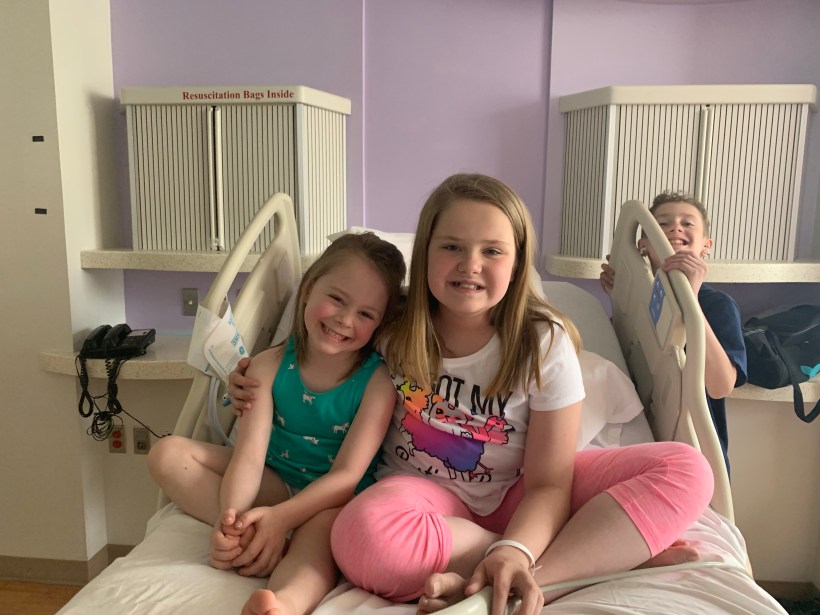
A neuroimmunologist visited us that afternoon to tell us all about Myasthenia and explain her treatment plan, and one of the sweet, baby-faced residents on the neurology team told me this is what they like to call a “slam dunk diagnosis.” Ella received 3 days of IVIG (intravenous immunoglobulin – basically antibodies from other people’s blood that are given through an IV over several hours). She blew several veins in the daily process, and after the second round, she got the worst headache of her life (hours of vomiting and groaning in pain every time anyone in the room made a creaking noise…common side effect, and really, really sucks), and during all the in between time, she had a plethora of wonderful family and friends who visited and encouraged her.

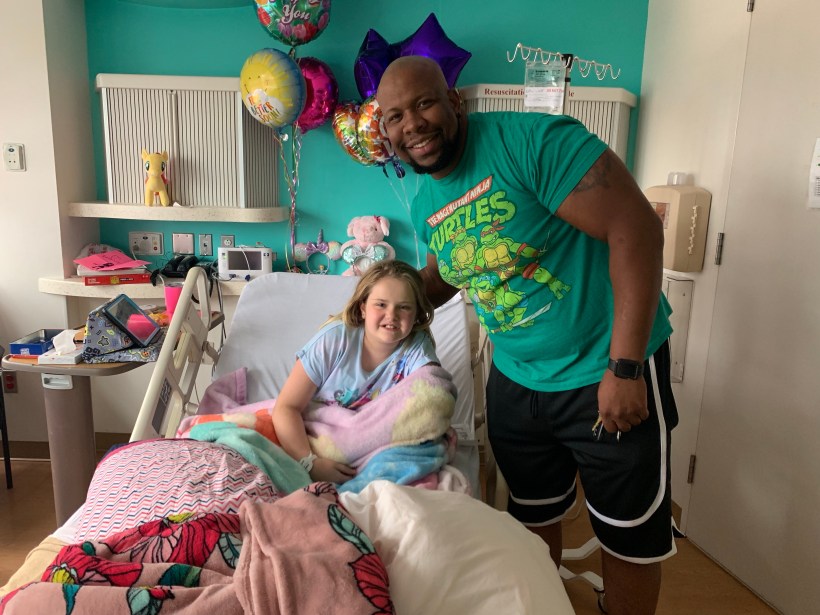

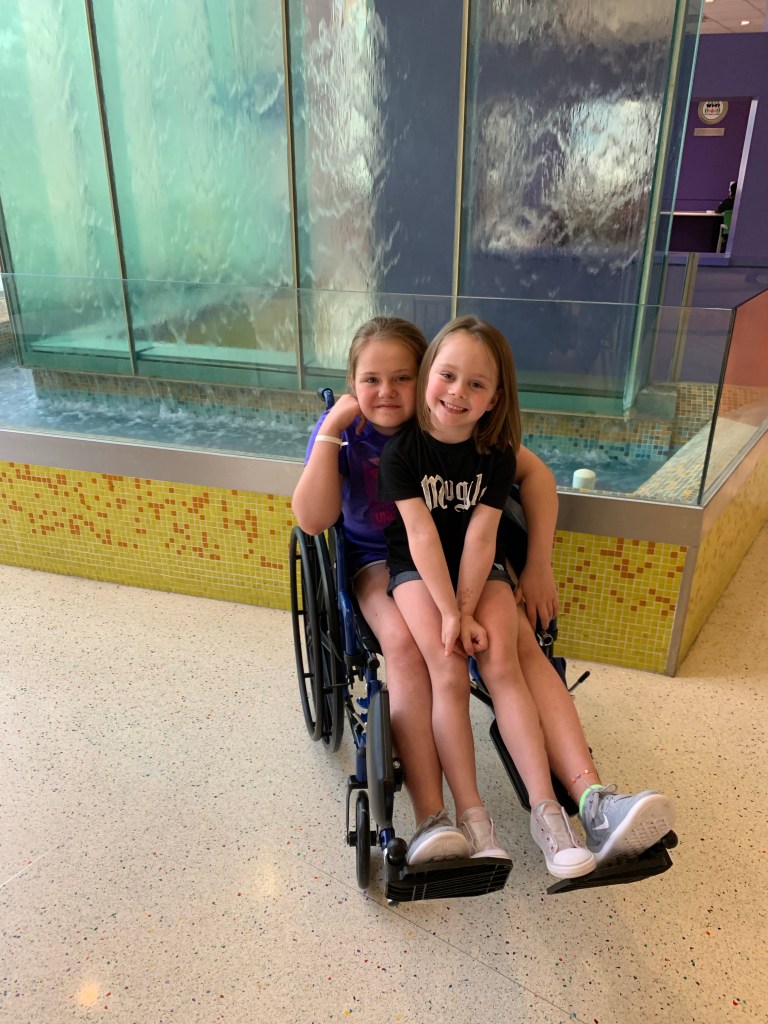
On the third day after her final infusion, she was given her very first dose of Mestinon which is a drug that temporarily allows the nerve to communicate with the muscle.
And then there was this. This is where Ella has given me permission to share a very, very special video with you. The IVIG can take several days to have maximum effect, but Mestinon, a short term treatment for Myasthenia, has an almost immediate effect. This video starts with Ella a few minutes before she received the first dose of Mestinon, and then about 30 minutes afterward. (Side note: the reason she is wearing gloves in the first part of the video is because…Ella. If you know her, you know she loves to play doctor and stashes gloves for her bag on every visit.)
A miracle in the form of a syrup. We had not heard normal speech in months, and I had seriously begun to brainstorm ways to prepare her for a life of impaired communication abilities. And yet here she was. Two very long months of wild frustration, and it took less than 30 minutes to clear up. All from a miracle syrup. Her speech was back, she was able to WALK out of the hospital, and her breathing was magically better. Mestinon is only a very small portion of treatment for Myasthenia that is this severe, but I’ll get into that next week.
I would like to end this post with the following acknowledgement and advice:
I do not hate the doctors who misdiagnosed Ella, nor do I think they are “bad doctors” who put children’s lives in danger. They ended up listening when it counted, and she got the diagnosis she needed and that was all that mattered in the end. I continue to hold in high regard and respect those in the medical field and am grateful for the work they do on a daily basis to further research cures for diseases that include Myasthenia Gravis. (Side note: I mean, I am a wee bit salty that they didn’t all do a big ol’ apology march through the room so my inner child could stick out her tongue and be all, “I told you so, I told you so,” but, you know, grown up stuff.)
Most importantly, the advice I would like to give is this: YOU as the parent are the very best advocate for your child. No matter how much you respect and trust a doctor or group of doctors, and no matter how intimidated you feel, it is ALWAYS ok to question them, or to push back, or to ask them to explain that thing you didn’t understand one more time. If you feel like what they are telling you isn’t right, trust your intuition and get a second opinion. Or a third if you feel you need it. Sometimes it takes finding the right people with the right experience to listen to you and have an open mind to truly find out what is going on. There are plenty of respectful ways to do this, and lessons can be learned for everyone involved.
Ella’s journey didn’t end here…the road didn’t get much easier after diagnosis, and she’s had some scary stuff happen. We still see several specialists at this same hospital and have had wonderful experiences through multiple hospital stays including a surgery in the months following this. Mostly because of the nurses. If anyone tells you nurses at children’s hospitals aren’t angels who hide their wings under their scrubs, you can punch them right in the face because they’re obviously lying to you.
Next week: Grappling with the ups and downs of MG, nasty side effects of medicines, and the juggling act of life.

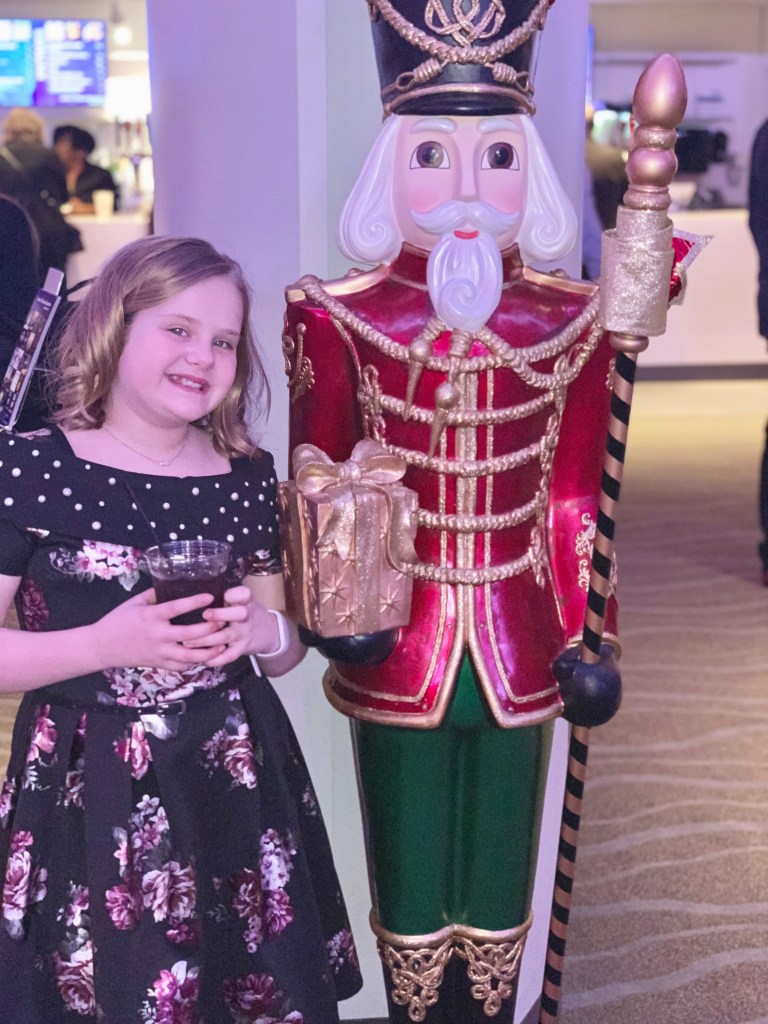
 Snowflake Warrior